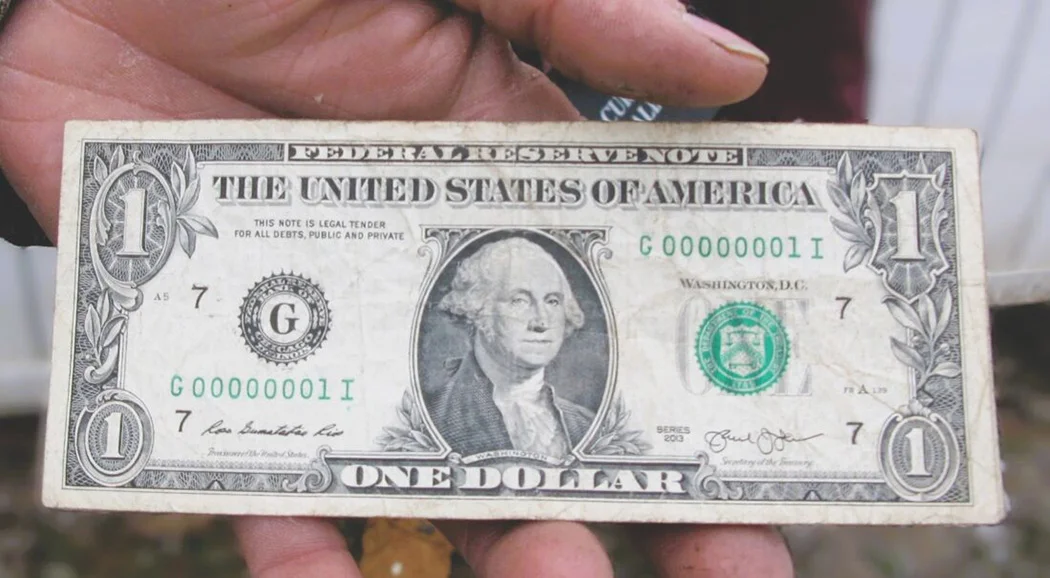
A rare one dollar bills collection can be worth significantly more than face value to currency experts. The most valuable $1 bills share certain traits: “Star Notes,” printing errors, or “Fancy Serial Numbers” like solid digits or ladders. For example, a $1 bill with a serial number like 00000001 can sell for $1,000 to $5,000 at auction. Always check your change for misprints or unique sequences, as these “errors” are exactly what collectors are hunting for.
Most $1 bills in circulation are worth exactly $1. But certain patterns and features make specific notes highly collectible. It takes about 60 seconds to check – and the upside can be hundreds of times the face value.
What Makes a One Dollar Bill Rare?
| Feature | What to Look For | Why Collectors Want It |
|---|---|---|
| Low serial number | 00000001-00000100 | First prints of a series – extremely scarce |
| Solid serial number | All 8 digits the same (e.g., 44444444) | Statistical rarity – 1 in ~11 million |
| Star note (*) | * symbol in the serial number | Replacement bill – printed in smaller runs |
| Ladder serial | 12345678 or 87654321 | Sequential digits – visually striking |
| Radar serial | Same forward and backward (e.g., 27144172) | Palindrome pattern |
| Printing error | Missing ink, miscut, double print | Production mistake – very few in circulation |
| Pre-1963 series year | Look for year near portrait | Older notes carry historical collector premium |
| Super repeater | 12341234 or 56785678 | Two identical 4-digit sequences |
Most Valuable Rare $1 Bills and What They’re Worth
| Bill Type | Example | Estimated Value Range |
|---|---|---|
| Solid serial (all same digit) | 11111111 or 99999999 | $500-$5,000+ |
| Super low serial | 00000001 | $1,000-$10,000+ |
| Low serial (top 100) | 00000007 | $150-$2,500 |
| 1928 series (first small-size) | Any 1928 $1 bill | $20-$300+ in good condition |
| Radar serial | 12344321 | $25-$150 |
| Ladder ascending | 12345678 | $75-$500 |
| Star note (rare run) | * in serial, low print run | $5-$500+ depending on rarity |
| Major printing error | Missing face, miscut 50%+ | $100-$1,500+ |
Star Notes – What They Are and Why They Matter
Star notes are replacement bills printed when a defective note is destroyed during production. They’re identified by a star (*) symbol at the beginning or end of the serial number. Because they’re printed in smaller quantities than regular notes, they’re inherently rarer.
- A star note from a small print run (under 640,000) is especially valuable.
- Check the print run size using the Star Note Lookup tool at MyCurrencyCollection.com.
- Star notes in excellent condition (crisp, uncirculated) command the highest prices.
How to Check If Your $1 Bill Is Rare
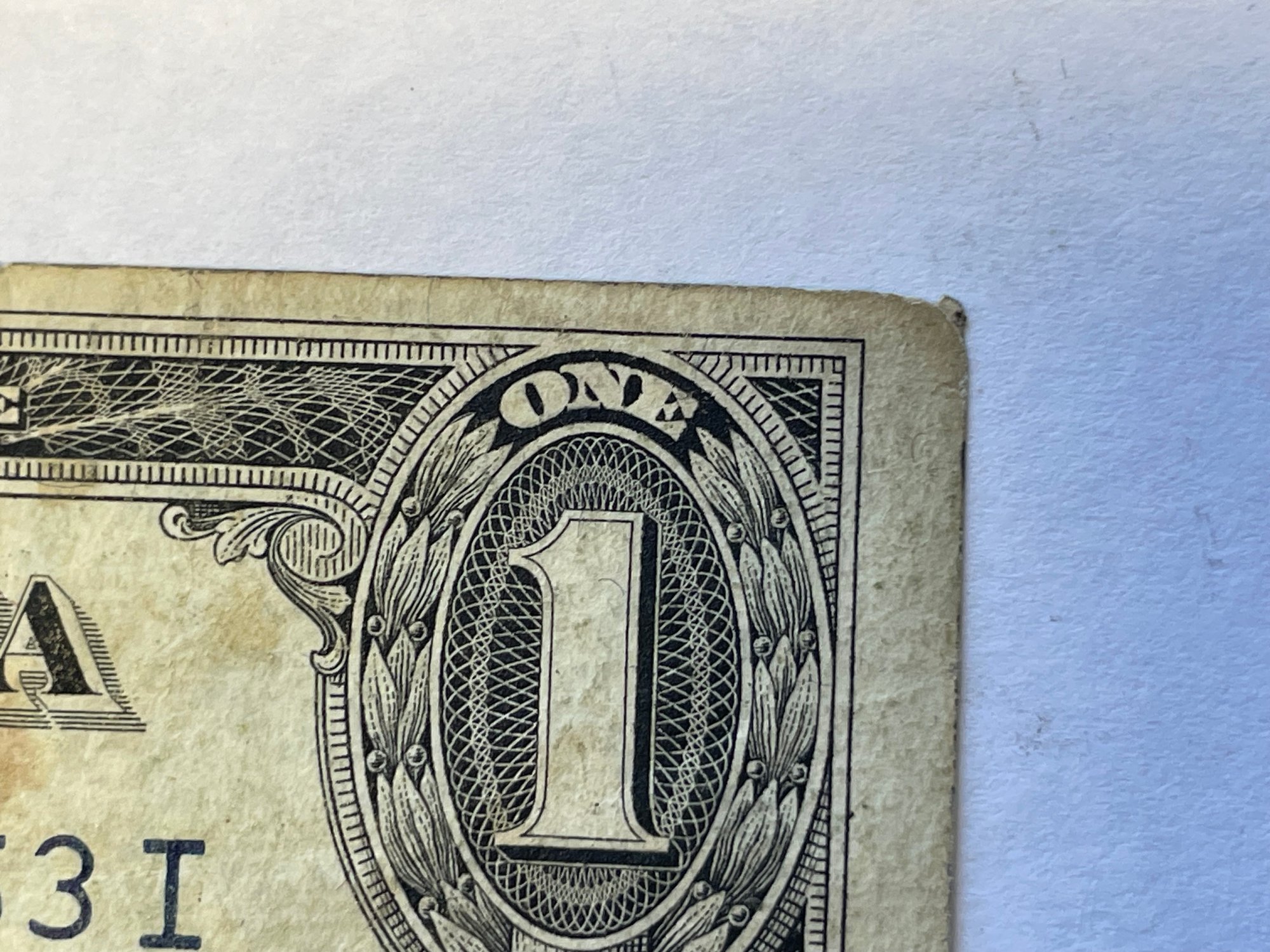
- Look at the serial number on the front of the bill (printed twice in green ink).
- Go to CoolSerialNumbers.com – enter your serial to see if it qualifies as ‘fancy.’
- Check for a star (*) – if present, visit MyCurrencyCollection.com to check the print run size.
- Look up the series year – a 1928 or 1934 series year adds collector value.
- Search completed eBay listings for your specific serial number pattern to see real sale prices.
Where to Sell Rare Dollar Bills
- eBay – Largest buyer base for currency; auction format works best for genuinely rare notes.
- Heritage Auctions (ha.com) – Best for high-value graded currency; they reach serious collectors.
- PMG (Paper Money Guaranty) – Professional grading can increase a note’s value and credibility.
- Local coin and currency dealers – Quick in-person appraisal; useful for a baseline offer.
- Reddit (r/papermoney) – Free community appraisals and collector interest.
How to Store and Protect Valuable Bills
- Never fold, write on, or carry a potentially valuable bill in your wallet.
- Store in a Mylar currency sleeve or rigid top-loader (available at coin shops).
- Keep away from sunlight and humidity – both degrade paper currency over time.
- For bills worth $100+, consider professional grading through PMG to preserve and certify their value.
The next time you get change or empty your pockets, take a quick look at the serial numbers. The odds are slim – but the person who found a $1 bill worth $4,500 on eBay thought the same thing before they checked. It costs nothing to look.